Hardscape Service
Steps & Stairways
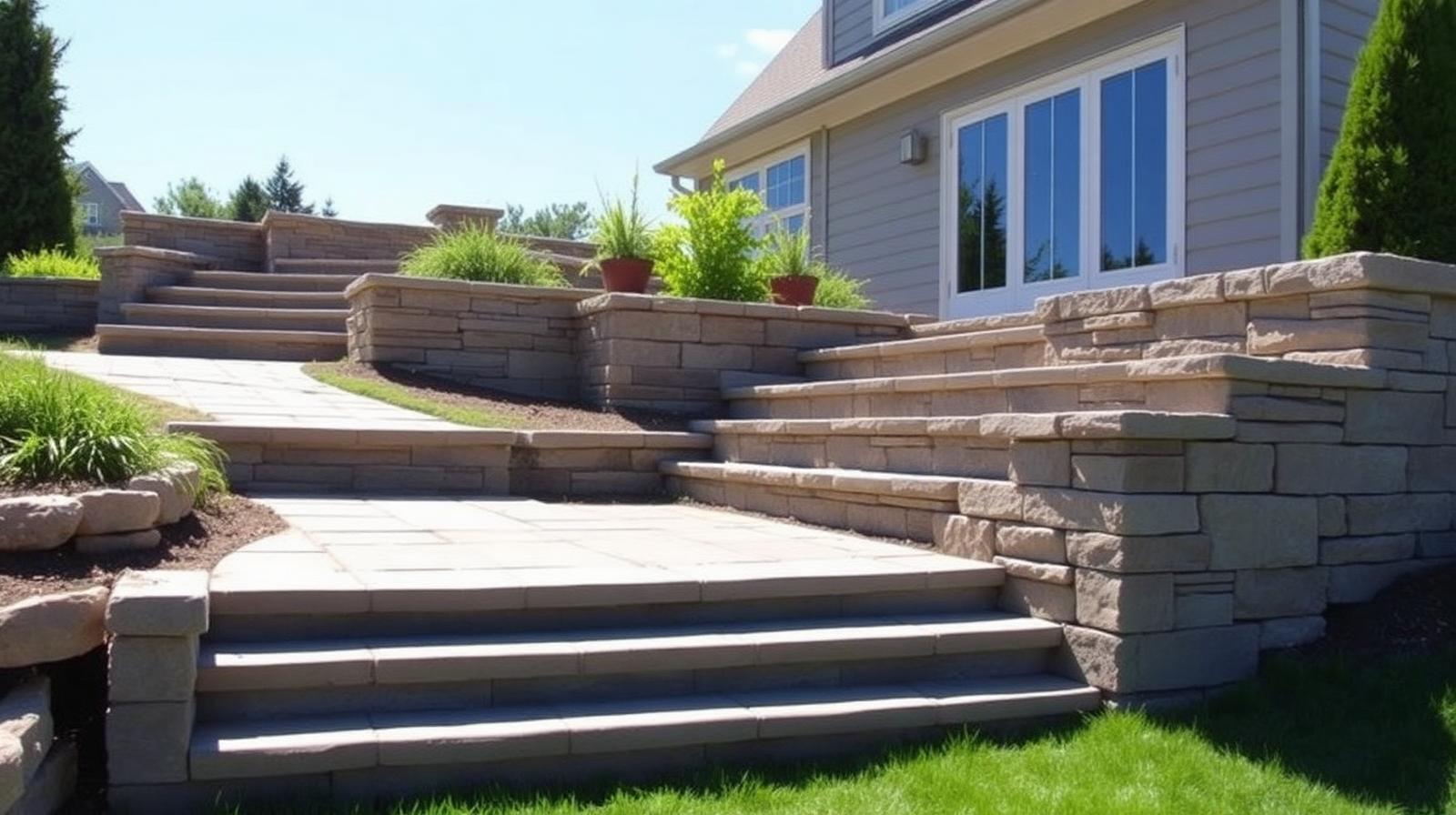
Stone, paver, and bluestone steps built on frost-depth footings to last through Michigan winters.
Home & Hardscape designs and builds exterior steps and stairways for homeowners throughout Metro Detroit and Southeast Michigan. From a simple two-step entry to a full stairway connecting split-level outdoor spaces, we build steps that are safe, durable, and finished to match your home and hardscape.
What We Build
Exterior steps and stairways connect grade changes on your property — from the driveway to the front door, from a patio down to the yard, from one level of a tiered landscape to another. We build entry steps, patio steps, retaining wall steps, garden stairways, and pool deck steps.
Every set of steps we build is designed to meet safe riser and tread dimensions, properly drain water off the surface, and hold up through Michigan's freeze-thaw cycles without heaving or cracking.
Materials
Step & Stairway Materials
Natural Bluestone Or Flagstone Treads
Flat stone treads set on a mortared block or concrete base. A clean, timeless look that works with almost any home style. Bluestone is the most popular choice — flat, durable, and available in cut or irregular shapes.
Concrete Pavers
Paver steps built from the same material as your patio or walkway for a cohesive look. Pavers can be stacked to create risers and set as treads, or used with a concrete block base and paver tread on top.
Segmental Retaining Wall Block
Steps built from the same block used in retaining walls and seat walls. A good choice when steps are integrated into a retaining wall or seat wall system. Allan Block, Versa-Lok, and similar products are commonly used.
Poured Concrete
A durable, cost-effective choice for utility steps — side entries, basement walkouts, and garage entries. Can be broom-finished for traction or formed with a stone veneer face for a more finished appearance.
Brick
A traditional option that fits well with brick homes common in Metro Detroit. Brick steps require a concrete footing and mortared construction. Formal in appearance, very durable when built correctly.
Timber Or Landscape Ties
A lower-cost option for informal garden steps on gentle slopes. Not recommended for main entries or high-traffic areas — timber deteriorates over time, especially in Michigan's wet seasons.
Design
Step Design: Getting The Dimensions Right
Safe, comfortable steps follow consistent proportions. The most important numbers:
Riser Height
6 – 7.5 in
The vertical face of each step.
Tread Depth
11 – 14 in
The horizontal surface you step on.
Tread Overhang
1 – 1.5 in
Past the riser face for finish and foot reference.
Steps that are too tall feel steep and tiring. Steps with shallow treads feel rushed and are harder to navigate, especially in winter boots. We design every stairway with comfortable proportions before anything is built.
Width matters too. Entry steps should be at least 4 feet wide — 5 to 6 feet is more welcoming and easier to navigate with bags or when two people are walking together.
Pricing
Every Project Is Different
We provide free on-site estimates with itemized pricing — no guesswork, no surprises. Contact us to schedule yours.
Request a Free EstimateHow We Build
Installation Process
Site Consultation
We assess the grade change, discuss material and width options, and calculate the number of steps needed for safe riser and tread proportions.
Demolition
Existing steps or landscaping in the way are removed and disposed of.
Footing Installation
A poured concrete footing is set below Michigan's frost line to prevent heaving.
Base Construction
Concrete block or poured concrete forms the structural base for each step.
Tread & Riser Installation
Stone, paver, or brick treads and risers are set and secured with mortar or construction adhesive.
Finishing
Joints are tooled or pointed, edges are cleaned, and the surface is checked for level and drainage slope.
Cleanup & Walkthrough
All debris removed, final walk with you before we leave.
Built To Last
Why Exterior Steps Fail In Michigan — And How We Prevent It
Most step failures in Michigan come from one of two problems: no footing or inadequate drainage.
Steps without a footing below the frost line heave every winter as the ground freezes and thaws. After a few seasons they're unlevel, cracked, and a trip hazard. We pour a concrete footing below frost depth on every set of steps we build — no exceptions.
Water that pools on step treads or gets behind the face of the steps freezes and expands, cracking mortar joints and eventually the stone or brick itself. We slope every tread slightly forward for drainage and use proper mortar and flashing where steps meet the house.
FAQ
Frequently Asked Questions
Ready to Start Your Project?
We respond within 24 hours. No pressure, no obligation.
Home & Hardscape at a Glance
- Family-owned, owner-operated
- No subcontractors — Evan on site
- Serving Troy & Metro Detroit
- Fully insured
- Renovations, repairs & hardscape
- Free, no-obligation estimates