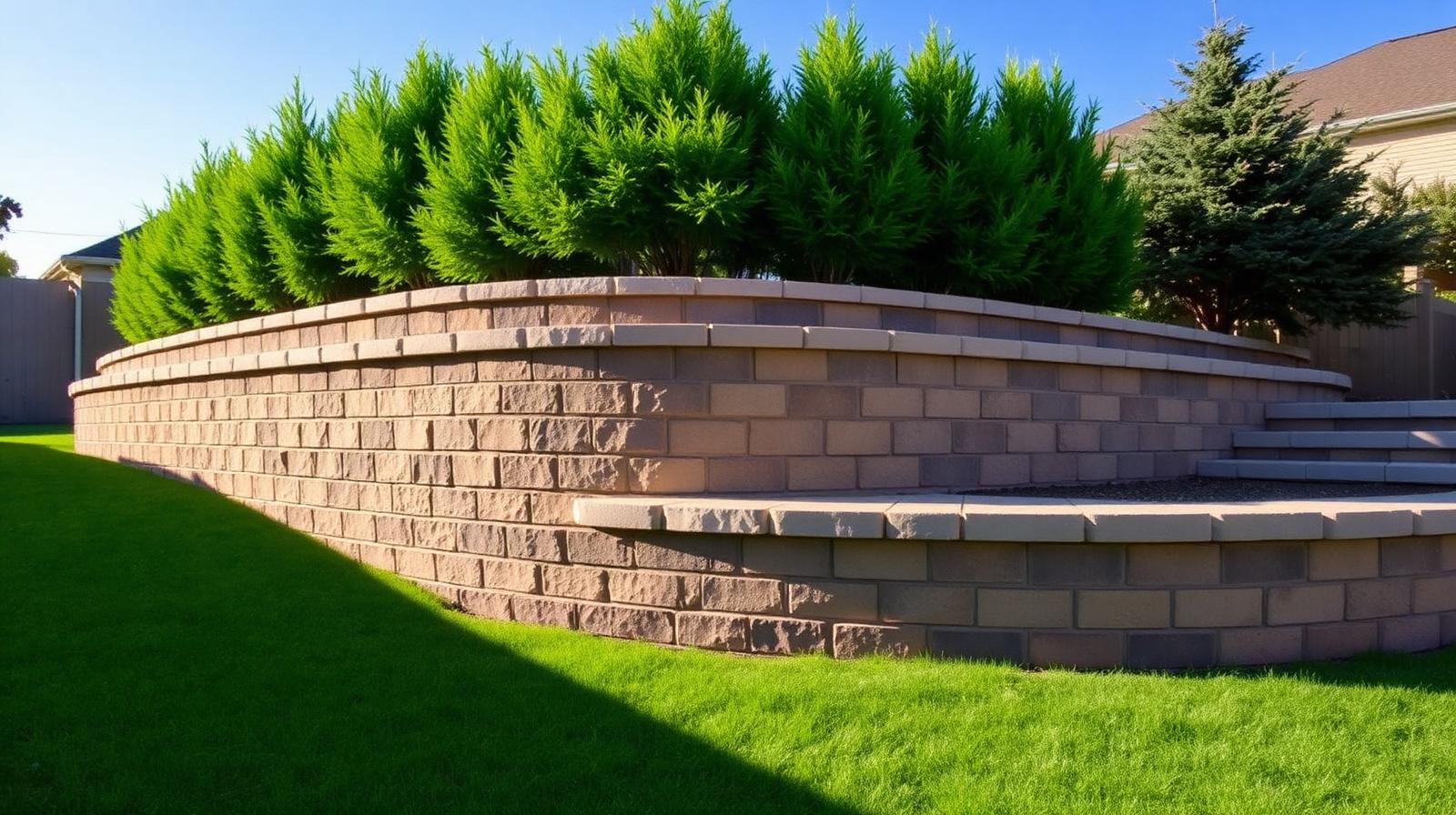
Hardscape Service
Retaining Walls
Engineered segmental and natural stone retaining walls built to hold up through Michigan's freeze-thaw cycles.
Home & Hardscape builds retaining walls for homeowners throughout Metro Detroit and Southeast Michigan. We handle everything from small garden walls to large structural walls that manage significant grade changes and drainage issues.
What Is a Retaining Wall?
A retaining wall is a structure built to hold back soil on a sloped property, preventing erosion and creating level usable space. In Metro Detroit, retaining walls are commonly used to stabilize sloped backyards, define landscape tiers, protect foundations from soil movement, and create flat areas for patios, driveways, or garden beds.
Materials
Which Material Is Right For You?
The best material depends on the wall's height, the load it needs to hold, your budget, and the look you want. Here's how the most common options compare.
Segmental Concrete Block
The most popular choice for residential retaining walls in Michigan. Interlocking concrete units (Allan Block, Versa-Lok, or similar) stack without mortar, drain naturally, and hold up well through freeze-thaw cycles. Best for walls under 4 feet — taller walls require engineering and geogrid reinforcement.
Natural Stone
Fieldstone or boulders give a more natural look that fits well in landscaped settings. Dry-stacked fieldstone walls have been used in Michigan for generations and drain well by design. Best for low walls under 3 feet with moderate load requirements.
Poured Concrete or CMU
Used for structural walls where load capacity is the priority. Common in commercial settings and for taller residential walls with significant grade changes. Requires footings and is typically finished with stone or stucco facing.
Timber or Railroad Ties
Lower cost option for garden walls and low-load applications. Not recommended for walls over 3 feet or in areas with poor drainage — timber deteriorates over time, especially in Michigan's wet seasons.
Brick
A traditional look that matches many older Metro Detroit homes. Brick retaining walls require a concrete footing and mortar, making them more labor-intensive. Best suited for decorative or low walls.
Pricing
Every Project Is Different
We provide free on-site estimates with itemized pricing — no guesswork, no surprises. Contact us to schedule yours.
Request a Free EstimateHow We Build
The Installation Process
A properly built retaining wall starts well below the surface. Here's what the process looks like for a standard segmental block wall.
Site Consultation
We assess the slope, soil conditions, drainage, and what the wall needs to hold back before recommending a material and design.
Excavation
We dig a trench below the frost line — at least 12 inches deep in Michigan — for the base course of the wall.
Base Preparation
We compact a gravel base to provide drainage and a level, stable foundation for the first course of block.
Wall Construction
Each course of block is set with a slight backward batter (lean into the hill) for structural stability. Geogrid reinforcement is added for walls over 3 feet.
Drainage Installation
A perforated drain pipe is installed behind the wall and surrounded by clean gravel to direct water away and prevent hydrostatic pressure buildup.
Backfill & Compaction
Clean fill is compacted in layers behind the wall as it goes up.
Cap & Cleanup
Cap blocks are glued to the top course for a finished look. All debris is removed from your property.
Built To Last
Why Retaining Walls Fail — And How We Prevent It
Most retaining wall failures in Michigan come down to two things: inadequate base depth and poor drainage. When walls are built without going below the frost line, they heave and shift over winter. When water isn't directed away from the wall, hydrostatic pressure builds up behind it and pushes it outward.
We address both on every job — proper base depth for Michigan's frost depth, and drainage pipe behind every structural wall. A wall built right the first time shouldn't need to be rebuilt.
FAQ
Frequently Asked Questions
Ready to Start Your Project?
We respond within 24 hours. No pressure, no obligation.
Home & Hardscape at a Glance
- Family-owned, owner-operated
- No subcontractors — Evan on site
- Serving Troy & Metro Detroit
- Fully insured
- Renovations, repairs & hardscape
- Free, no-obligation estimates